
Piante palustri for sale
Sort by:
31 products
31 products


HIPPURIS VULGARIS
Hippuris vulgaris is a perennial herb with a unique charm, perfect for giving a touch of originality to the edges of ponds and water gardens. Its shape, reminiscent of a small fir, is given by the erect stem and the whorled leaves of an intense dark green. The greenish flowers, although discreet, complete the natural and harmonious appearance of this aquatic plant.
Main Features
- Ornamental Appearance : The “small fir” shape makes it an attractive choice for ponds and tanks.
- Verticillate leaves : Dark green in colour, arranged in a circle around the stem, they create a geometric and refined effect.
- Discrete flowering : Small greenish flowers from March (III) to April (IV), for a touch of delicate naturalness.
- Exposure : It adapts well to full sun or partial shade, offering versatility in different contexts.
Cultivation Information
- Flowering Period : From March (III) to April (IV).
- Vegetation height : 20-30 cm above water level.
- Planting depth : 2-5 cm below water level.
Choose Hippuris vulgaris to give your water garden a touch of intense green and an unmistakable appearance, transforming every body of water into a corner of natural elegance.

GLYCERIA MAXIMA VARIEGATED
Glyceria maxima variegata is an ornamental aquatic plant with linear and flexible leaves, crossed by streaks of white, green and yellow, which in spring and autumn even take on delicate pink shades. The spadix inflorescence, composed of tiny yellowish flowers, completes its decorative appearance, making it ideal for adding a touch of color and movement to the edges of ponds and wetlands.
Main Features
- Variegated Foliage : Streaks of white, green and yellow, with elegant pink veining in spring and autumn.
- Arched Habit : Linear and flexible leaves that create a fluid and harmonious effect.
- Yellowish Inflorescences : Small flowers in spadix that enrich the plant with a light decorative accent.
- Suitable for Different Exposures : Grows well in full sun or partial shade, offering versatility in the garden.
Cultivation Information
- Flowering : From March (III) to April (IV).
- Height : 30-60 cm in moist soil.
- Planting depth : 0-5 cm below water level.
Choose Glyceria maxima variegata to add liveliness to your aquatic space: a unique touch of colour, a soft shape and a discreet flowering that will enhance borders and ponds of various sizes.

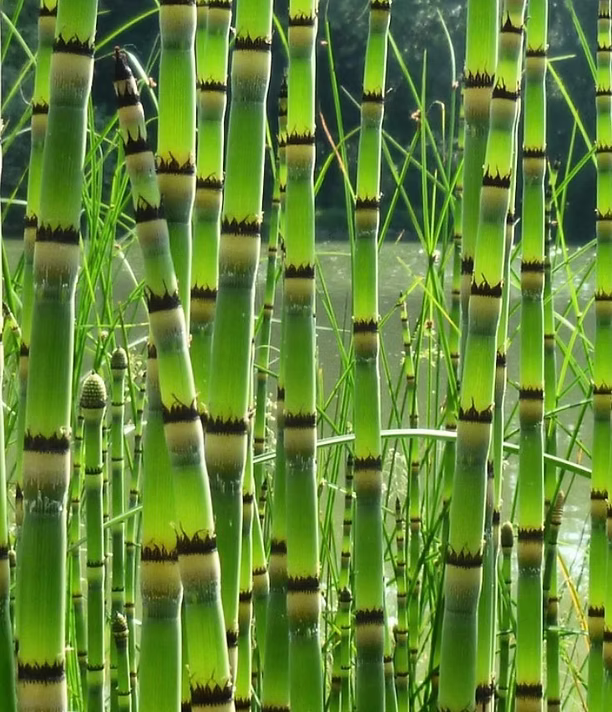
🌿 Steli architettonici sempreverdi, un classico moderno. L'Equisetum hyemale (equiseto invernale) è una pianta rustica e sempreverde dagli steli eretti, cavi e di un verde scuro intenso, scanditi da nodi ben evidenti. Il suo aspetto grafico e architettonico lo rende perfetto per dare struttura e verticalità ai bordi del laghetto e alle zone umide. Cresce bene anche in pochi centimetri d'acqua.
📋 Scheda tecnica
| 🌿 Tipo | Equiseto rustico, sempreverde |
| ✨ Particolarità | Steli eretti a nodi, aspetto architettonico |
| 📏 Altezza | 80–100 cm |
| 🌊 Profondità | 0–10 cm |
| ☀️ Esposizione | Pieno sole – mezz'ombra |
| 📍 Uso | Bordi laghetto, zone umide |
✅ Acquisti sereno: spedizione con garanzia di attecchimento e oltre 60 anni di esperienza VivaiVanetti nelle piante acquatiche.

VERY RUSTIC PERENNIAL HERBACEOUS PLANT
Rhizomatous Aquatic Plant for Borders and Phytoremediation
This herbaceous perennial and rhizomatous plant is ideal for the edges of ponds and bodies of water, thanks to its rusticity and its ability to contribute to phytoremediation. It forms dense tufts of dark green stems with a triangular section, while the sheath-shaped leaves wrap around the base of the stems for a natural and tidy appearance. In summer, it produces inflorescences composed of conical spikelets accompanied by rigid dark green bracts, bent at a right angle, which seem to be an extension of the stems.
Characteristics :
- Triangular Stems : Dense clumps of dark green stems, for a natural ornamental effect.
- Sheathed Leaves : They wrap around the base of the stems, giving a neat appearance.
- Elegant Inflorescences : Conical spikelets accompanied by rigid bracts, similar to a continuation of the stems.
- Phytoremediation : Perfect for improving the water quality in ponds.
- Hardiness and Versatility : Suitable for full sun or partial shade conditions.
-
Depth and Height :
- Vegetation above water : 20-30 cm.
- Depth under water : 2-5 cm.
- Flowering period : From June to August.
With this aquatic plant, add a natural and functional element to your garden, perfect for decorating borders and contributing to the health of the aquatic environment.

ALISMA PLANTAGO-AQUATIC
Ornamental and Phytoremediative Aquatic Plant
Alisma Plantago-Aquatica is a robust and versatile aquatic plant, known for its elegant structure and its ability to adapt to different environments. Its highly branched stem forms a characteristic pyramidal structure thanks to the branches arranged laterally at different levels. The oblong leaves and small white flowers with three petals, which bloom at the end of the secondary branches, add a delicate touch to the aquatic landscape. Resistant to strong currents, this plant is also used for phytoremediation, helping to keep the water clean.
Characteristics :
- Unique Appearance : Branched pyramid-shaped stem and elegant oblong leaves.
- Flowers : Small white three-petalled flowers, which bloom in a terminal position on secondary branches.
- Use : Ideal for phytoremediation and for aquatic environments with strong currents.
- Exposure : Prefers full sun or partial shade.
-
Depth and Height :
- Vegetation above water : 60-80 cm.
- Depth under water : 2-5 cm.
- Flowering Period : Between the fifth and seventh month (May-July).
With Alisma Plantago-Aquatica, enrich your water garden with a plant that combines aesthetics and functionality, ideal for improving water quality and decorating ponds and waterways.

LUDWIGIA PALUSTRIS (Ditch poppy)
Rustic Aquatic Plant Suitable for Aquariums
Ludwigia Palustris, known as Ditch Poppy, is a hardy perennial aquatic plant, perfect for decorating ponds and aquariums. Its long, creeping brown stems produce roots at every internode, firmly anchoring themselves on the banks and offering a natural and lush appearance. The leaves vary depending on the environment: opposite and elliptical, green when emerged, while submerged they become lanceolate and reddish. In summer, tiny greenish flowers with four petals, hermaphrodite, bloom in the axils of the leaves, adding a discreet touch of natural charm.
Characteristics :
- Versatile Stems : Creeping and robust, they root at every internode, ideal for consolidating banks.
- Adaptive Leaves : Green and elliptical when emerged, lanceolate and reddish when submerged.
- Simple Flowers : Tiny, greenish, four-petalled, they bloom during the summer.
- Suitable for Aquariums and Ponds : Ideal for decorating bodies of water and creating balanced aquatic habitats.
- Exposure : Prefers full sun or partial shade.
-
Depth and Height :
- Vegetation above water : Up to 20 cm.
- Depth under water : 2-15 cm.
- Flowering period : From June to September.
With Ludwigia Palustris, enrich your water garden or aquarium with a rustic and versatile plant, perfect for creating a natural and decorative environment.

CAREX PENDULA
Rustic Plant for Phytoremediation and Consolidation of Banks
Carex Pendula is a perennial and rustic aquatic plant, ideal for decorating ponds and consolidating banks. Its linear, pointed and downward-curving leaves create an elegant and natural effect. The stems, taller than the leaves, carry cylindrical spikes that host both male and female flowers, contributing to its ornamental charm. Thanks to its robustness, this variety is widely used for phytoremediation and to prevent erosion of banks.
Characteristics :
- Decorative Leaves : Linear, pointed and curved downwards, for a harmonious appearance.
- Spike Flowers : Tall stems with cylindrical spikes containing male and female flowers.
- Practical Function : Perfect for consolidating banks and improving water quality thanks to phytoremediation.
- Suitable for Ponds and Wet Areas : Ideal for decorative and functional spaces.
- Exposure : Grows well in full sun or partial shade.
-
Depth and Height :
- Vegetation above water : 100-120 cm.
- Depth under water : 2-5 cm.
- Flowering period : From April to May.
With Carex Pendula, add to your water garden a plant that combines beauty, resistance and functionality, ideal for a healthy and stable environment.

IRIS PSEUDACORUS PLENA
Rustic Elegance with Double Golden Yellow Flowers
Iris Pseudacorus Plena is a robust and decorative aquatic plant, ideal for ponds and humid gardens. Characterized by blue-green leaves, as tall and decorative as the stem, this variety stands out for its large double golden yellow flowers, which add a touch of liveliness and refinement. Very rustic, Iris Pseudacorus Plena is known for its phytoremediation capacity, effectively filtering pollutants dissolved in water. It grows well even in little water, adapting to different environmental conditions.
Characteristics :
- Decorative Leaves : Green-blue, tall and slender, they add a natural ornamental effect.
- Bright and Double Flowers : Golden yellow, large in size, for an extraordinary visual impact.
- Efficient Phytoremediation : Ideal for improving water quality in ponds and bodies of water.
- Rusticity and Adaptability : It survives in difficult conditions and also grows in shallow water.
- Exposure : Prefers full sun or partial shade.
- Plant height : 50-80 cm in moist soil.
- Flowering period : From May to June.
With Iris Pseudacorus Plena, enrich your water garden with a plant that combines aesthetics, functionality and resistance, perfect for ponds and humid environments.

🌾 Giunco compatto dalle teste sferiche. Il Juncus ensifolius è un piccolo giunco ornamentale dalle foglie strette e piatte, riconoscibile per le caratteristiche teste di fiori sferiche, di colore bruno scuro. Compatto e rustico, è perfetto per dare struttura e dettaglio ai bordi del laghetto.
📋 Scheda tecnica
| 🌿 Tipo | Giunco ornamentale rustico |
| 🎨 Infiorescenza | Sferica, bruno scuro |
| 📏 Altezza | 30–40 cm |
| 🌊 Profondità | 0–10 cm |
| ☀️ Esposizione | Pieno sole – mezz'ombra |
| 📅 Fioritura | Giugno – Agosto |
✅ Acquisti sereno: spedizione con garanzia di attecchimento e oltre 60 anni di esperienza VivaiVanetti nelle piante acquatiche.

CAREX REPARIA
Rustic Aquatic Plant for Phytoremediation and Flooded Banks
Carex Riparia is a rustic perennial herbaceous plant, perfect for decorating and protecting banks and ponds. Its linear, light green, downward-facing leaves form large tufts, creating a natural and ornamental effect. The spike-shaped inflorescences add a further decorative touch. Used for phytoremediation, this plant is ideal for consolidating banks subject to periodic flooding, contributing to the stability and health of the aquatic environment.
Characteristics :
- Ornamental Leaves : Linear, light green and downwards facing, forming sturdy tufts.
- Spike Inflorescences : Elegant and discreet, they add a decorative detail.
- Phytoremediation and Stabilization : Excellent for improving water quality and consolidating flooded banks.
- Hardiness : Resistant and suitable for harsh climates.
- Exposure : Prefers full sun or partial shade.
-
Depth and Height :
- Vegetation above water : 90-120 cm.
- Depth under water : 2-5 cm.
- Flowering period : From April to May.
With Carex Riparia, enrich your aquatic garden with a plant that combines beauty, resistance and functionality, ideal for creating a harmonious and sustainable environment.

ELEOCHARIS PALUSTRIS
Eleocharis palustris is a pretty marsh plant, perfect for adding a natural and delicate touch to the edges of your body of water. Its cylindrical, erect and spongy stems, wrapped at the base by a brown sheath, end with a small brownish spikelet that appears during the summer season.
Main Features
- Elegant Marsh Grass : Thin stems, soft in appearance but resistant, ideal for creating movement and plays of light near the water.
- Brown Spikelet : Small inflorescence that blooms from April (IV) to September (IX), adding a light touch of color.
- Vertical Habit : Perfect for giving momentum and verticality to humid areas of the garden.
- Ideal for Full Sun : It grows vigorously and maintains a healthy, compact appearance if placed in well-lit areas.
Cultivation Information
- Flowering : From April (IV) to September (IX).
- Vegetation height : 40-60 cm above water level.
- Planting depth : 2-5 cm below water level.
Choose Eleocharis palustris to give a fresh and natural look to your body of water: a versatile and refined plant, capable of enriching the garden with its discreet grace and the delicate touch of its brown spikelets.

CAREX NIGRA
Aquatic Plant for Phytoremediation and Decoration
Carex Nigra is a perennial aquatic plant, appreciated both for its aesthetic value and for its phytoremediation capacity. This plant is able to effectively absorb pollutants dissolved in water, helping to keep the environment healthy and clean. The long, erect, thin and sharp leaves give it an architectural appearance, while the flowers, arranged in compact cylindrical spikes, are brown if male and light green if female.
Characteristics :
- Efficient Phytoremediation : Ideal for improving water quality thanks to its ability to absorb pollutants.
- Elegant Leaves : Long, erect and sharp, with a modern ornamental appearance.
- Contrasting Flowers : Compact, cylindrical spikes, brown (male) or light green (female).
- Suitable for Ponds and Wetlands : Perfect for decorative or functional bodies of water.
- Exposure : Prefers full sun or partial shade.
-
Depth and Height :
- Vegetation above water : Up to 60 cm.
- Depth under water : 2-5 cm.
- Flowering period : From April to July.
With Carex Nigra, enrich your pond with a plant that combines aesthetics, functionality and high purifying power.

JUNCUS ARTICULATUS
Versatile Aquatic Plant for Cold and Temperate Zones
Juncus Articulatus is a perennial, rustic and adaptable plant, ideal for enriching ponds and water bodies in gardens located in cold or temperate-cold areas. With a horizontal underground rhizome, this plant grows up to 70 cm in height. The stem, cylindrical and smooth, is accompanied by thin leaves with cylindrical blades and evident transverse septa. The inflorescence is large, with erect or slightly inclined branches, and flowers arranged in glomeruli that add a natural and elegant touch.
Characteristics :
- Elegant Stem : Erect, cylindrical and smooth, for a tidy and decorative appearance.
- Thin Leaves : Cylindrical blades with evident transverse septa.
- Natural Inflorescences : Large, with erect or erect-patent branches and flowers in glomeruli.
- Climate Resistance : Suitable for cold and temperate-cold climates of Europe, Asia and North America.
- Exposure : Prefers full sun or partial shade for optimal growth.
-
Depth and Height :
- Vegetation above water : Up to 60 cm.
- Depth under water : 2-5 cm.
- Flowering period : From June to October.
With Juncus Articulatus, transform your water garden into a natural and resistant oasis, perfect for creating serene and harmonious environments.
FAQs
Use this text to answer questions in as much detail as possible for your customers.
Ogni pianta ha esigenze specifiche, ma in generale, le radici delle piante palustri devono essere immerse nel substrato, mentre le galleggianti vanno lasciate libere in superficie. L'uso di fertilizzanti naturali e il controllo della luce solare aiutano a mantenerle in salute. Ti invieremo una guida dettagliata con il tuo acquisto.
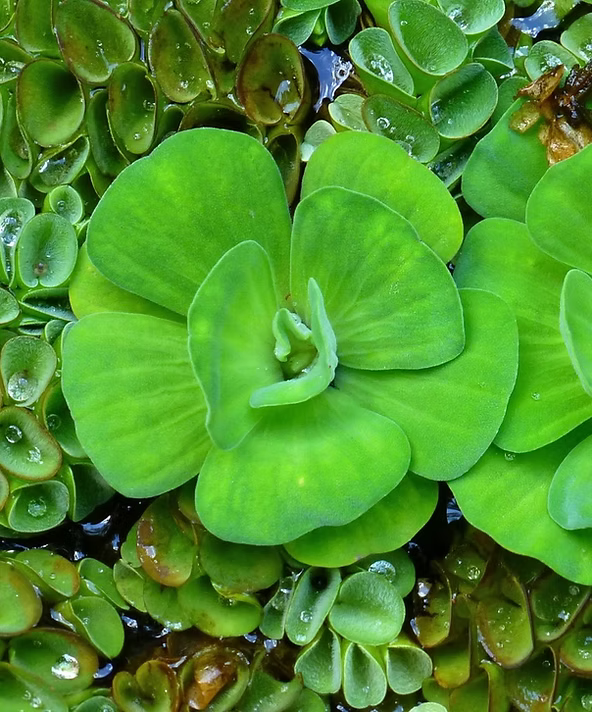
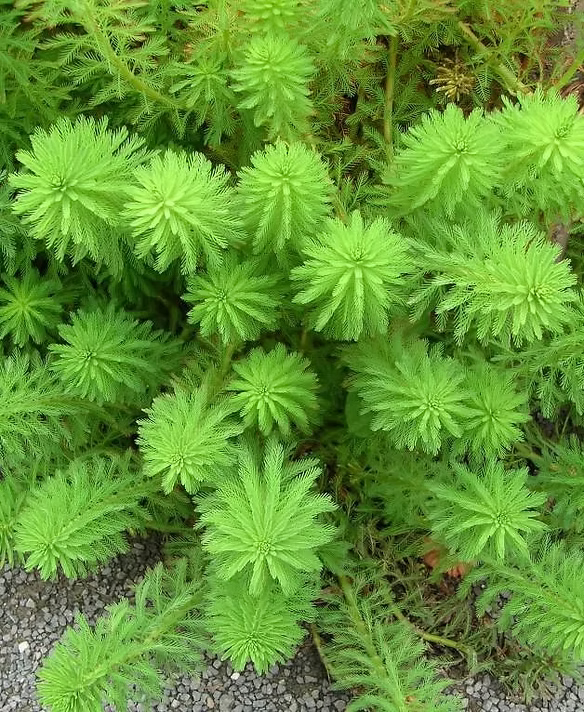
Sì! Le piante ossigenanti come il ceratophyllum assorbono i nutrienti in eccesso e riducono la crescita delle alghe. Le piante galleggianti come la lattuga d’acqua forniscono ombra e limitano l’evaporazione, contribuendo all’equilibrio dell’ecosistema acquatico.